





Eye For Film >> Movies >> Hidden in the Fog (1953) Film Review


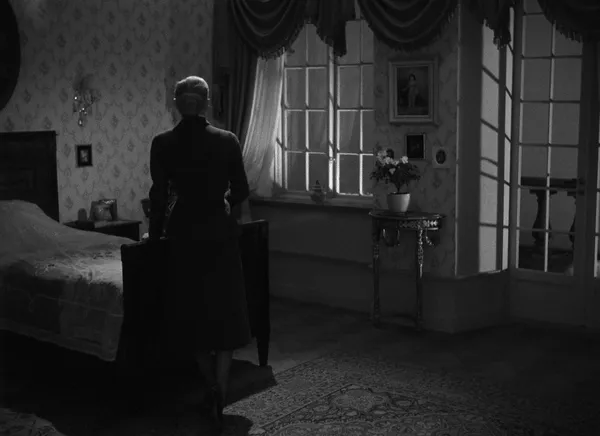

Lars-Eric Kjellgren's 1953 crime thriller Hidden In The Fog (I Dimma Dold), based on Vic Sunesson's novel, stars Eva Henning as Laura. It makes a number of references to Otto Preminger's 1944 noir Laura, a seminal piece in the genre. The name of the film's lead [1], her portrait hanging on the wall, and a structural element of the plot which is inverted. One of the characters in Hidden In The Fog even talks about the film Laura and the similarities between the two Lauras. Apart from the plot element the references are superficial, a polite nod of acknowledgement to a film the whole genre owes a dept to.
The camera drifts through a room and down a staircase, first person view. A woman stands in darkness framed by a window behind. She raises a gun, hesitates and then fires. Her husband, sleeping is a chair slumps dead. Laura flees the scene. Driving through the fog she crashes, trashing her foolproof alibi. Alone on the streets of Stockholm she must evade the authorities. The next day her conscience gets the better of her, she returns to her flat and and phones the police.
This is where the plot twists. In 1944 detective McPherson (Dana Andrews) is in Laura's flat falling in love with the dead woman's portrait. The corpse of the murder victim walks in on him, very much alive! In the Swedish film when Laura is on the phone making her confession the light turns on. Inspector Kjell Myrman (Sven Lindberg) has been waiting for her. Walter (Georg Rydeberg), her husband, was dead before she shot him, poisoned. This is possibly the first instance in fiction of the post mortem murder. There are mow mysteries to be solved.
The narrative in Hidden In The Fog switches between two parallel timelines, past and present. The past is brighter, mostly daytime, the present darker, often night, and Laura is androgynised. Before the 'murder' her hair and style of dress is feminine. After it, her clothes flatten her figure and her hair is tied tight close to her skull. At one point while she is on the run she steals a man's overcoat.
A number of things in this film happen in pairs: two murders, tram rides, meetings with a prostitute. It is not repetition exactly; the second event always has a different outcome. The second time Laura meets the prostitute (Sif Ruud) she accepts her offer of help and a place to spend the night. This is one of the few places where Laura is able to regain her femininity.
This and other Scandinavian noir differ from Hollywood's films in terms of their treatment of sex, violence and redemption. Here women have agency without being crammed into the femme fatale role, the prostitute is portrayed in a positive light and in the background of one scene there is female nudity. An artist's model steps down from the plinth she was posing on and lights a cigarette - a picture of boredom and indifference that mocks American prudishness. Others have lesbianism (Girl With Hyacinths) and reversal of gender roles within a relationship (Death Is A Caress). Confession and redemption are frequent occurrences within these films: the aforementioned Death Is A Caress starts with the murderer telling his lawyer why he did it.
Is there redemption for Laura in Hidden In The Fog? She did pump bullets into what appeared to be a defenceless man. The final shot of the film answers that.
[1] Interestingly the surnames of the two Lauras, Hunt and Willding, are in opposition, hunter and beast.
Reviewed on: 22 Nov 2026


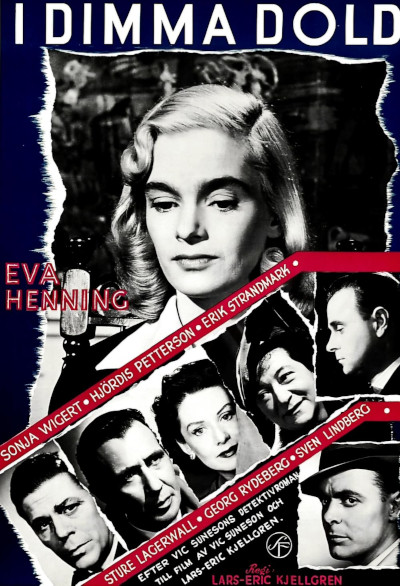
Director: Lars-Eric Kjellgren
Writer: Barbro Alving, Lars-Eric Kjellgren, Sven Bergström, Vic Sunesson
Starring: Eva Henning, Sonja Wigert, Hjördis Petterson, Dagmar Ebbesen, Sif Ruud, Mimi Nelson, Sven Lindberg, Sture Lagerwall, Georg Rydeberg, Hugo Björne, Erik Strandmark, Erik 'Bullen' Berglund
Year: 1953
Runtime: 88 minutes
BBFC: 
Country: Sweden
Festivals:
Search database: